The Origins
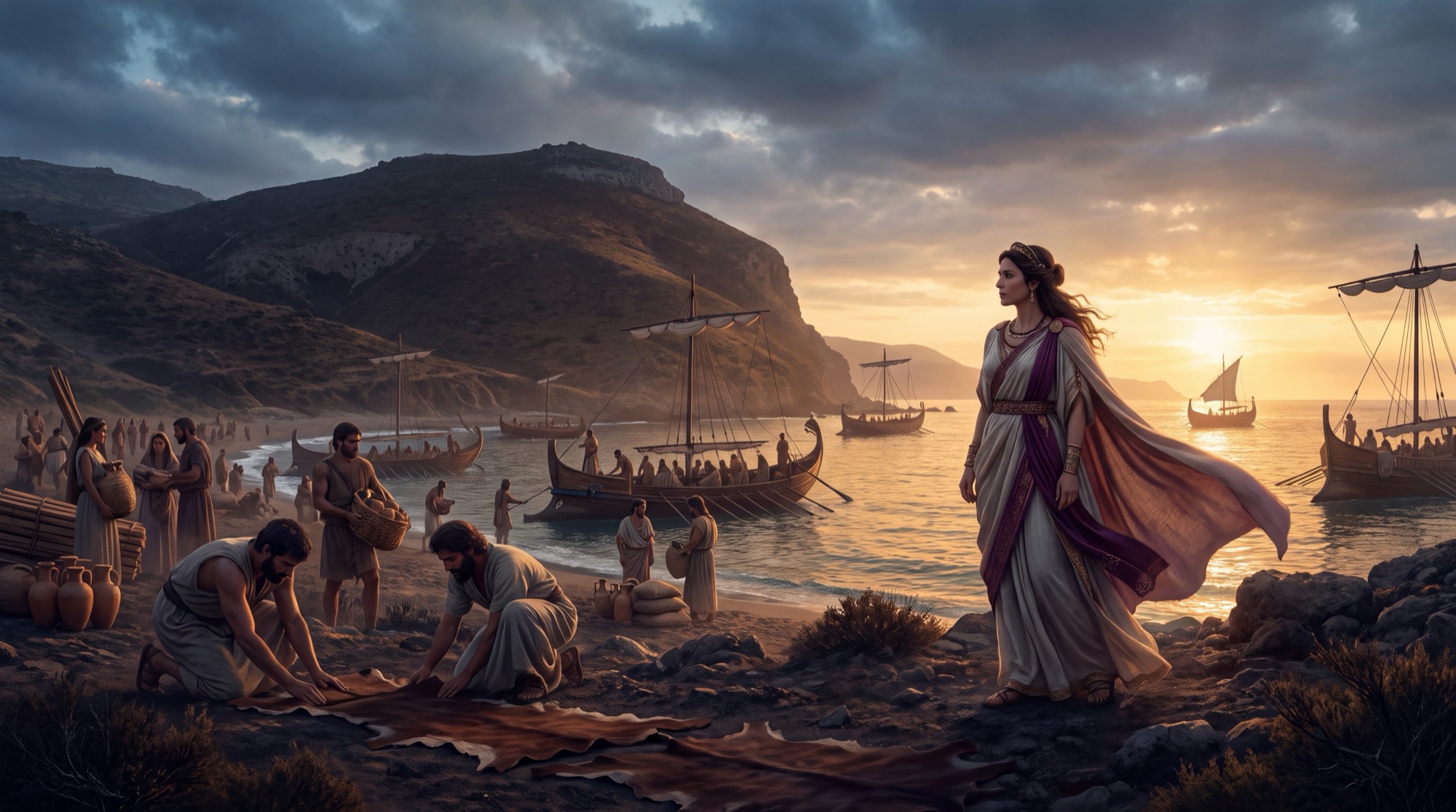
According to ancient tradition, Princess Elissa — later remembered as Dido — fled the Phoenician city of Tyre after her brother Pygmalion murdered her husband.
With loyal companions at her side, she crossed the Mediterranean in search of a place where they could begin again.
On the shores of North Africa, legend tells that Elissa asked the local ruler for only as much land as could be covered by a single oxhide.
He agreed.
Elissa cut the hide into impossibly thin strips and laid them end to end, encircling an entire hill.
That hill became Byrsa — the heart of a new city.
TRADITION
They called it Qart-Ḥadašt: The New City.
Carthage had begun.
The Awakening
Carthage was born from Phoenician roots, but it would not remain in the shadow of its mother cities for long.
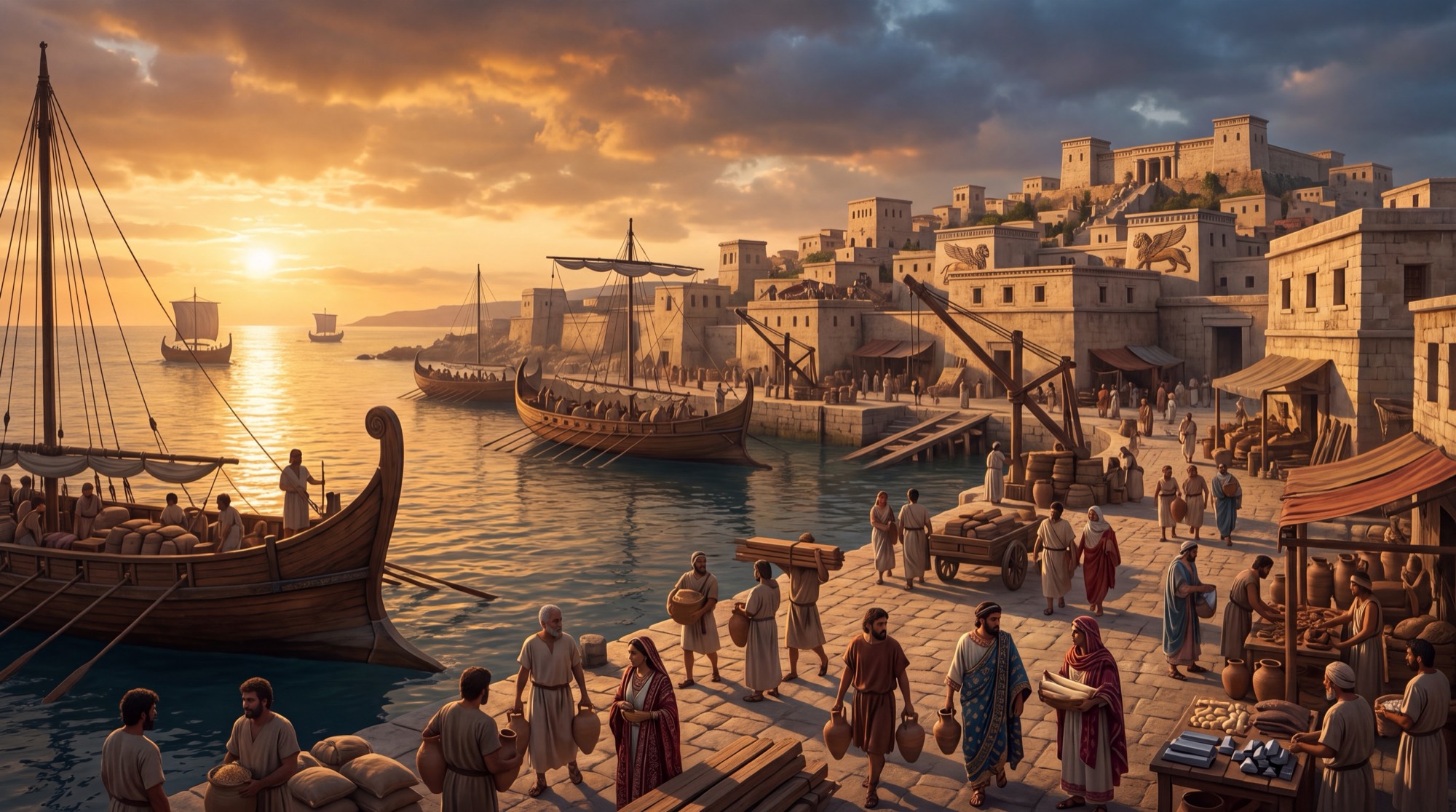
Its harbors opened toward the western Mediterranean, and ships began carrying Carthaginian merchants far beyond the African coast.
To Sicily.
To Sardinia.
To Iberia.
Beyond the Pillars of Heracles and toward the Atlantic.
From distant shores came silver, copper, ivory, grain, timber, dyes, ceramics, and precious goods.
On the quays beneath the city, cargo was weighed and argued over. Contracts were written and sealed. Bread was baked, hulls were patched, and in the crowded neighborhoods above the harbor, families watched the sea their lives depended on.
But Carthage traded in more than objects.
Ideas, languages, beliefs, craftsmanship, and people moved through its ports.
The settlement of exiles had become a Mediterranean metropolis.
And the sea became the source of its power.
The Lady of Carthage
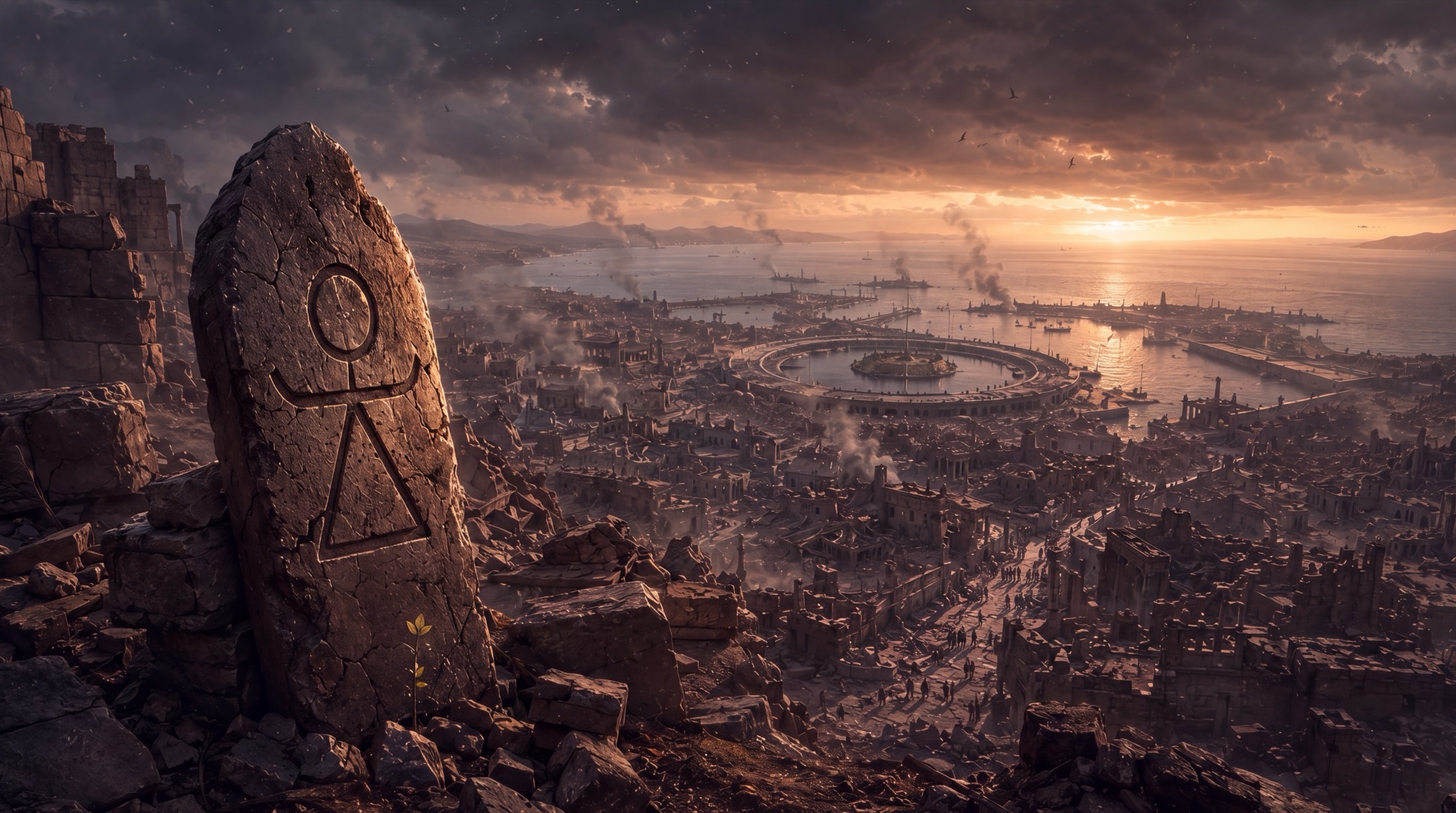
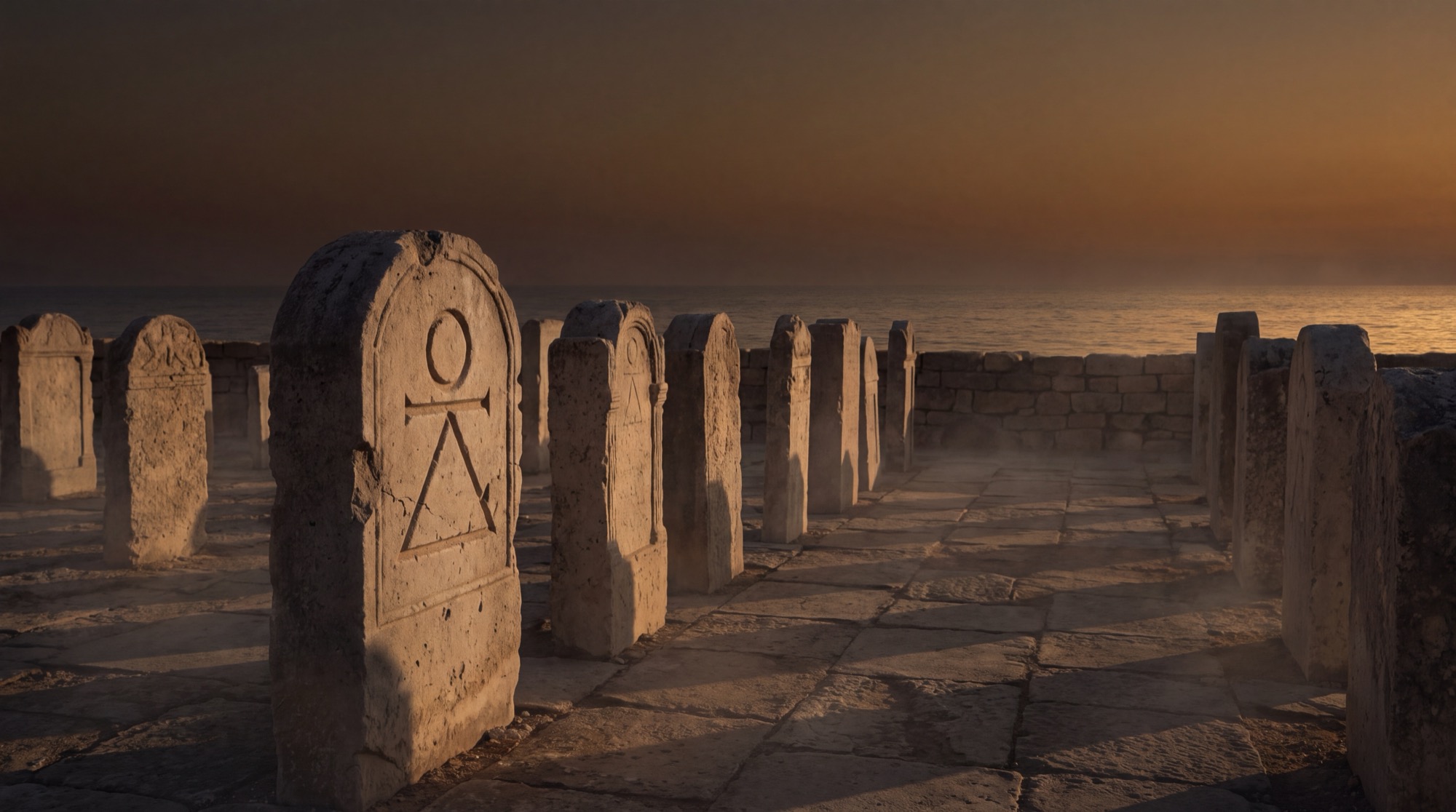
Above its harbors, Carthage kept a quieter precinct: an open court of sky and stone, where families set carved stelae among the stelae of older generations.
They stood facing the sea. Thousands of them still do.
ARCHAEOLOGY
Her name was Tanit — the Lady of Carthage. Beside Baʿal Hammon she watched over the city, and in its later centuries her name came first in the dedications.
INTERPRETATION
Cut into stone after stone is the same spare figure: a triangle, a raised bar, a circle lifted above them.
You have seen it before.
It stands at the door of this museum. It burned beside the oath. It will seal the last page. It is the Sign of Tanit — and every mark of it you have passed was hers.
The precinct now called the Tophet of Salammbô also held urns — the burned remains of infants and of young animals, buried beneath the vowed stones.
ARCHAEOLOGY
Greek and Roman writers accused Carthage of sacrificing its children. The stones themselves record vows fulfilled — never what was given.
ANCIENT ACCOUNT
Whether this ground held sacrifice, or the city’s grief for lives lost too soon, is still argued. The evidence is real; its meaning is not settled.
INTERPRETATION
What is beyond argument is the devotion.
One sign, carved over and over, set facing the sea.
Two Rising Powers
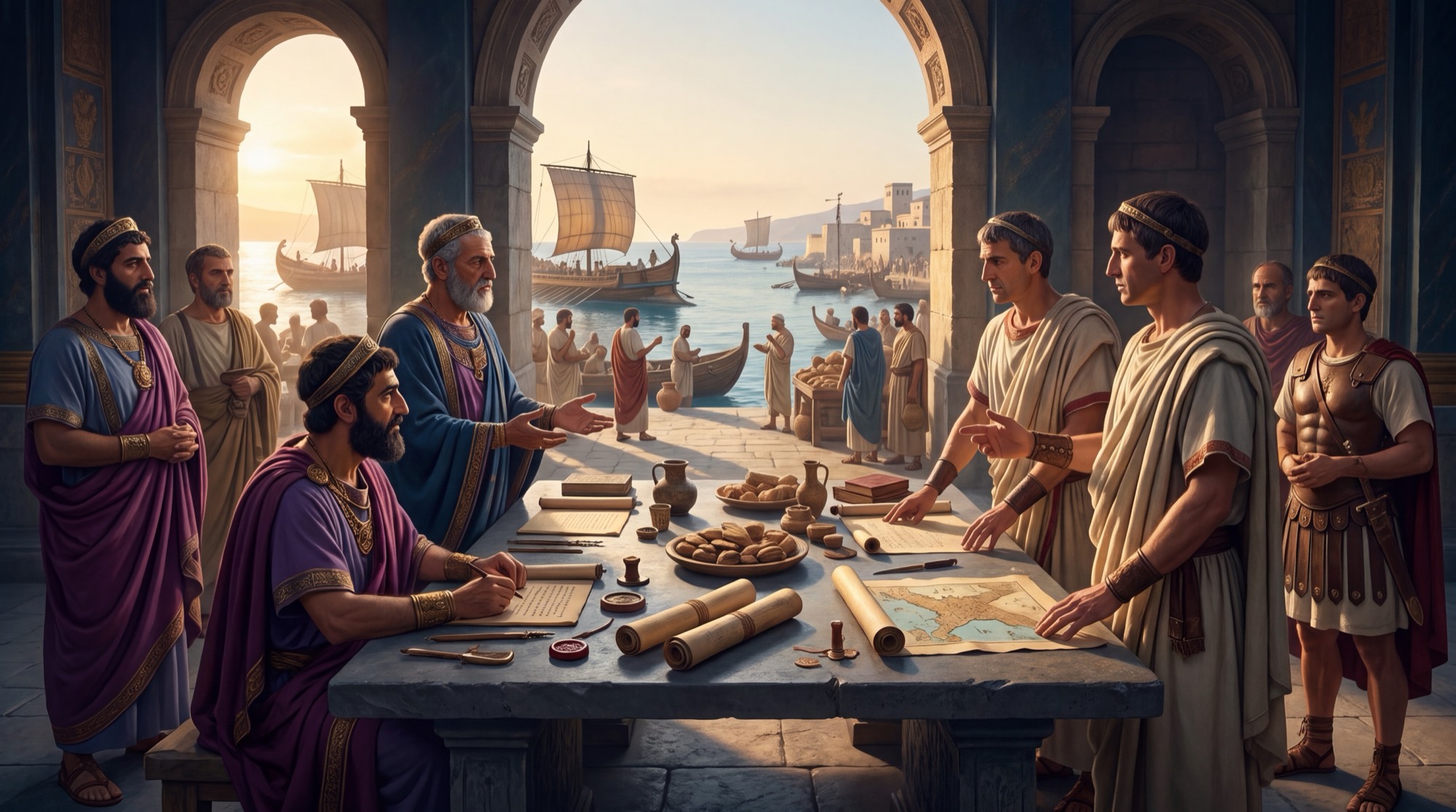
Centuries before Rome and Carthage would try to destroy one another, they met as powers with something to offer.
Trade.
Access.
Security.
Influence.
An early treaty between the young Roman Republic and Carthage established rules for merchants, navigation, alliances, and spheres of influence.
ANCIENT ACCOUNT · POLYBIUS
Rome was still growing.
Carthage already commanded the sea.
Behind a single sea-gate lay the proof: a double harbor. Merchant ships filled a great rectangular basin — and hidden behind it opened a circular war harbor, ringed with covered ship-sheds around an island at its center.
ARCHAEOLOGY · ANCIENT ACCOUNT
One ancient text carries Carthage past every map: it attributes to Hanno of Carthage a voyage far down the Atlantic coast of Africa. How far he sailed is still debated.
ANCIENT ACCOUNT
For a time, the two cities were not destined enemies.
They were partners watching the same horizon.
Neither yet knew that the Mediterranean would one day become too small for them both.
The First Warning
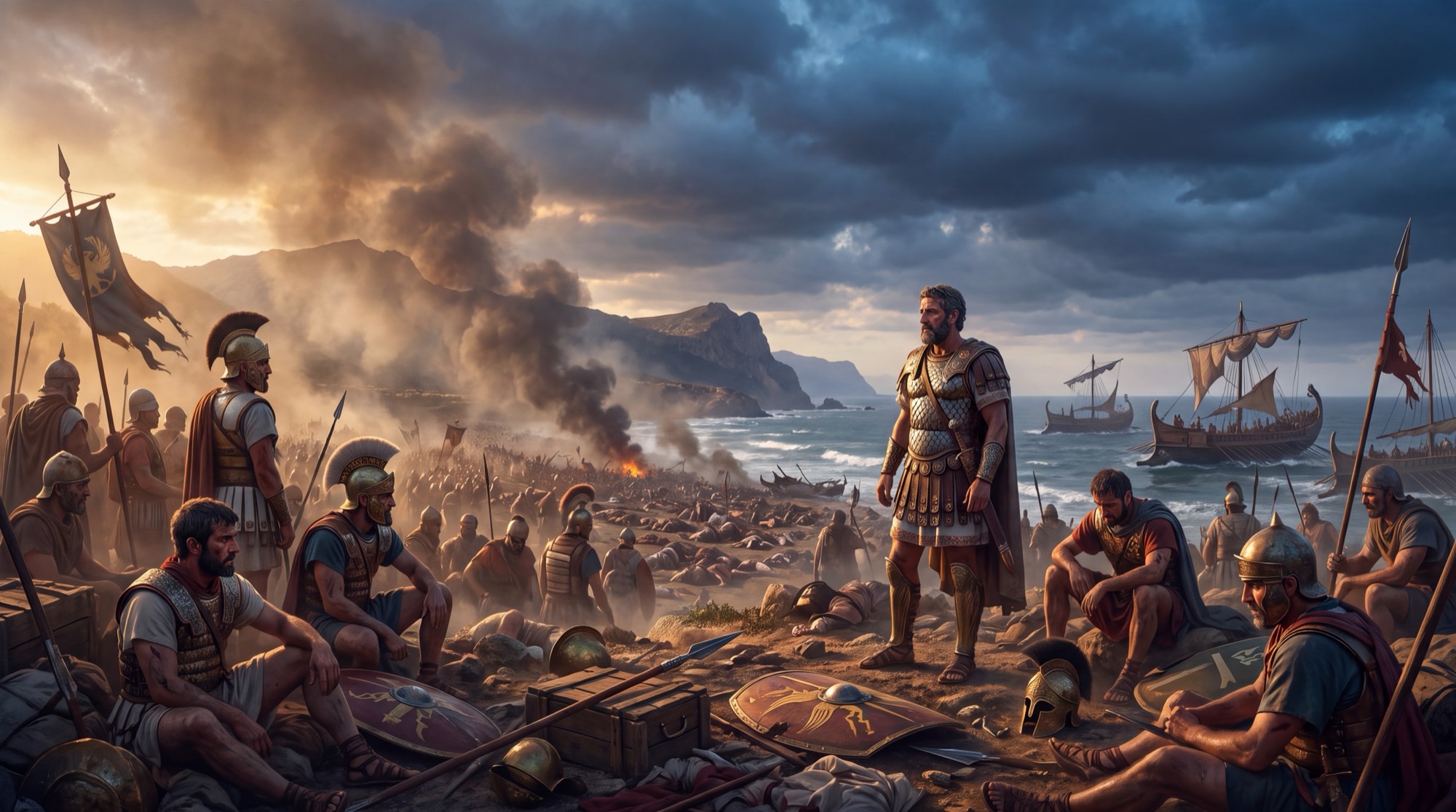
Across the waters of Sicily, Carthaginian ambitions collided with the Greek cities of the island.
At Himera, a great Carthaginian expedition met the forces of Syracuse and Acragas.
The result was devastating.
Carthage was defeated.
Greek writers remembered the battle as fought on the very day their own fleet met Persia at Salamis — a coincidence too perfect to trust, too famous to omit.
ANCIENT ACCOUNT · HERODOTUS
Its expansion in Sicily was checked, and the city was reminded that power in the Mediterranean could never be taken for granted.
But Carthage endured.
Its merchants continued sailing.
Its wealth continued growing.
Its fleets returned to the sea.
A defeat had wounded the empire.
It had not broken it.
The Collision
For generations, Rome had been a power of the Italian land.
Carthage was a power of the Mediterranean.
Then Sicily brought them face to face.
A dispute on the island became something far greater:
The First Punic War.
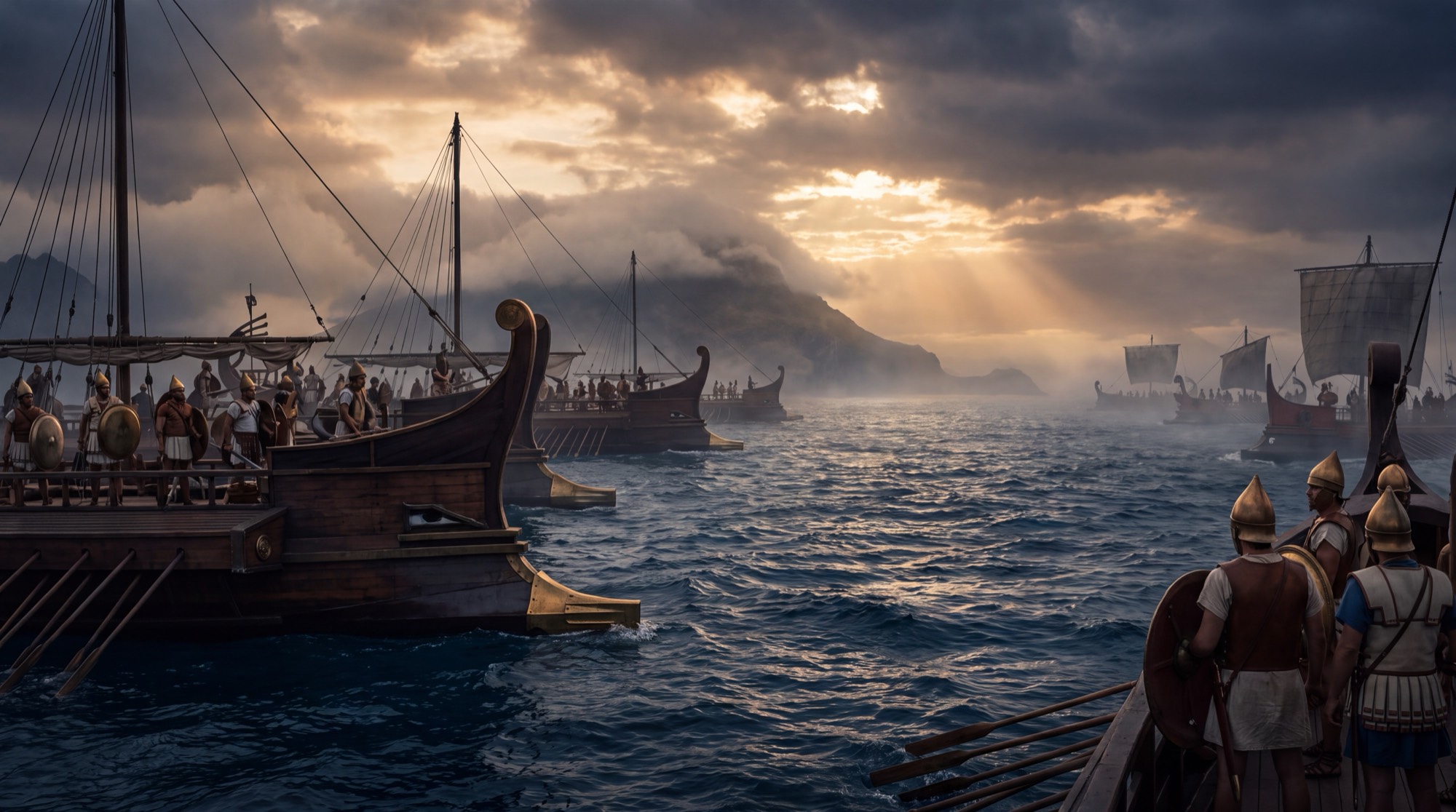
Rome began building fleets on a scale it had never attempted before.
It learned by imitation: a Carthaginian warship ran aground, and Rome copied it plank by plank, training its rowers on benches ashore before the hulls ever touched water.
ANCIENT ACCOUNT · POLYBIUS
Carthage fought to preserve the maritime world it had spent centuries creating.
For twenty-three years, fleets burned, armies crossed the sea, and thousands died for control of the waters between Africa, Sicily, and Italy.
Two civilizations had entered the same struggle.
Only one could dominate the western Mediterranean.
The First Fall
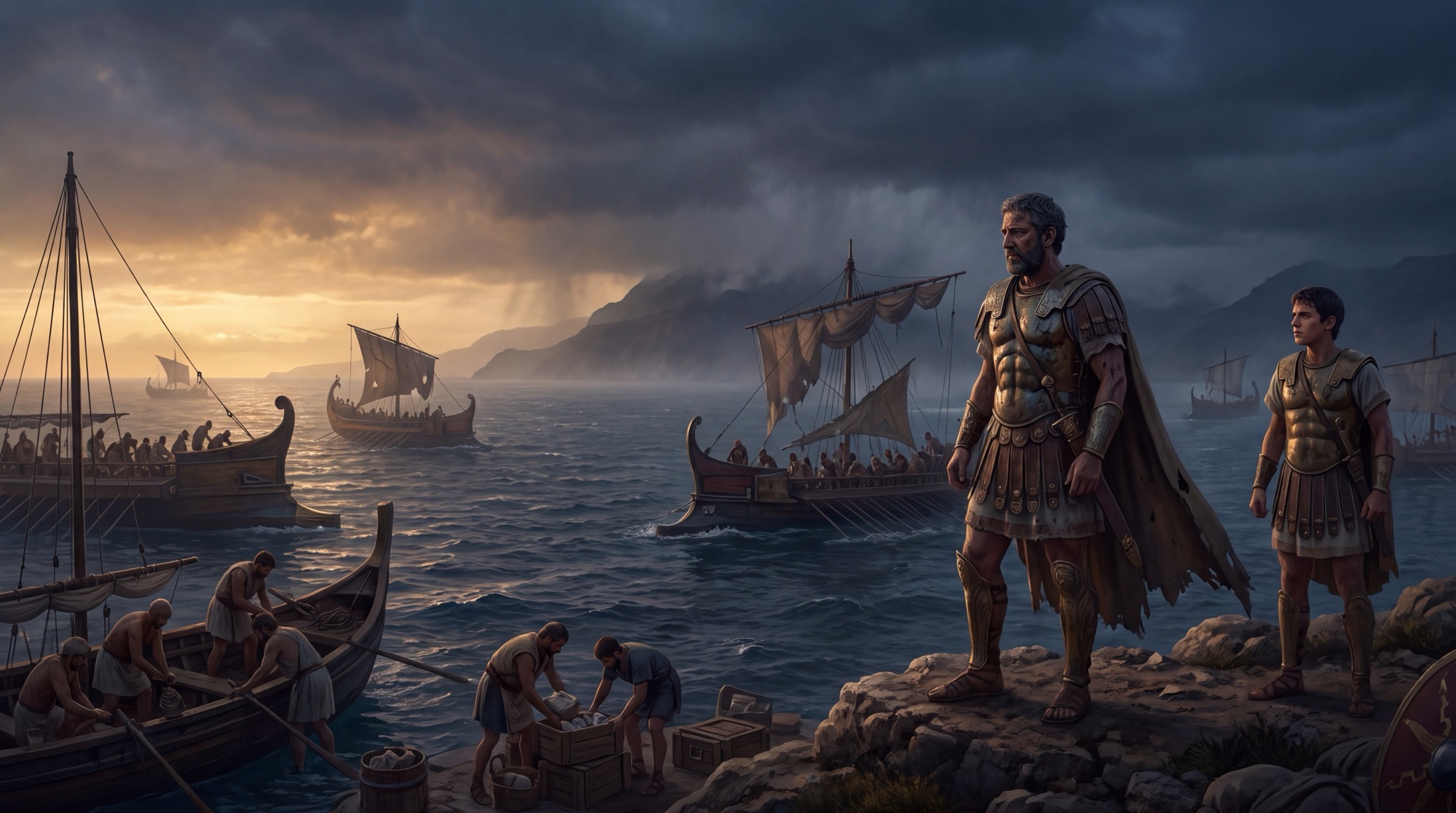
After more than two decades of war, Carthage could fight no longer.
Rome emerged victorious.
Sicily was lost.
Then Sardinia.
The maritime balance that had favored Carthage for generations began to shift toward Rome.
But Carthage did not disappear.
Instead, it looked west.
Across the Mediterranean lay Iberia, rich in metals, fertile lands, soldiers, and opportunity.
There, a powerful Carthaginian family — the Barcids — began building a new foundation for Carthaginian power.
Among them was a young man whose name Rome would never forget.
Hannibal.
The Impossible March
Hannibal Barca did not choose the path Rome expected.
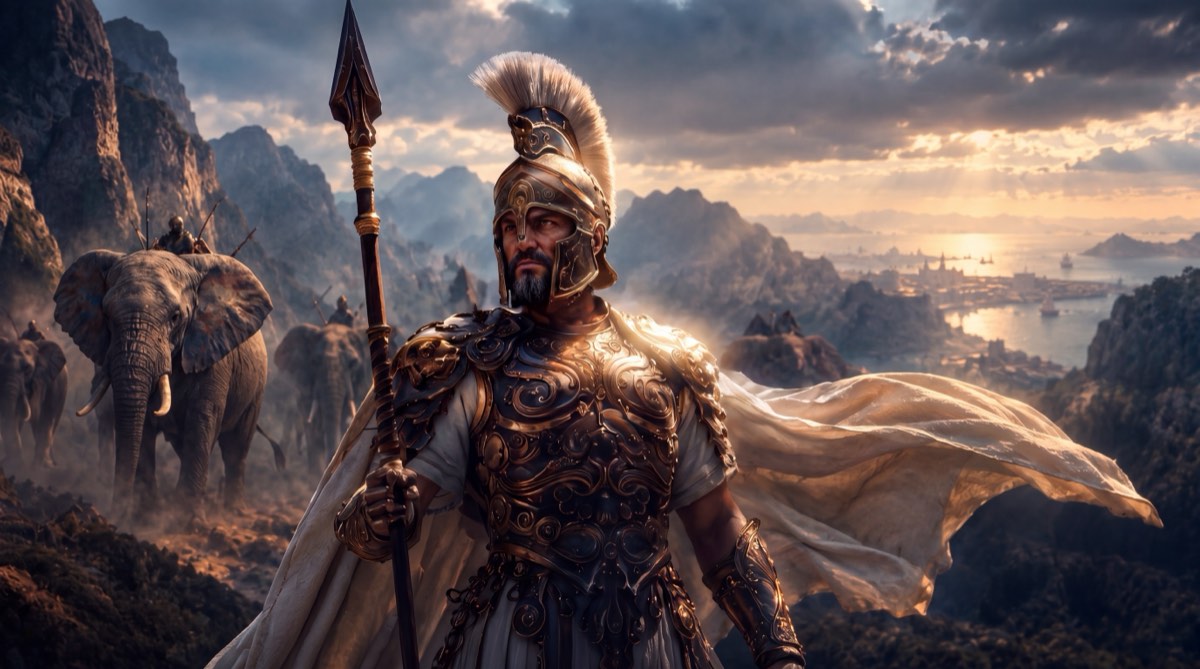
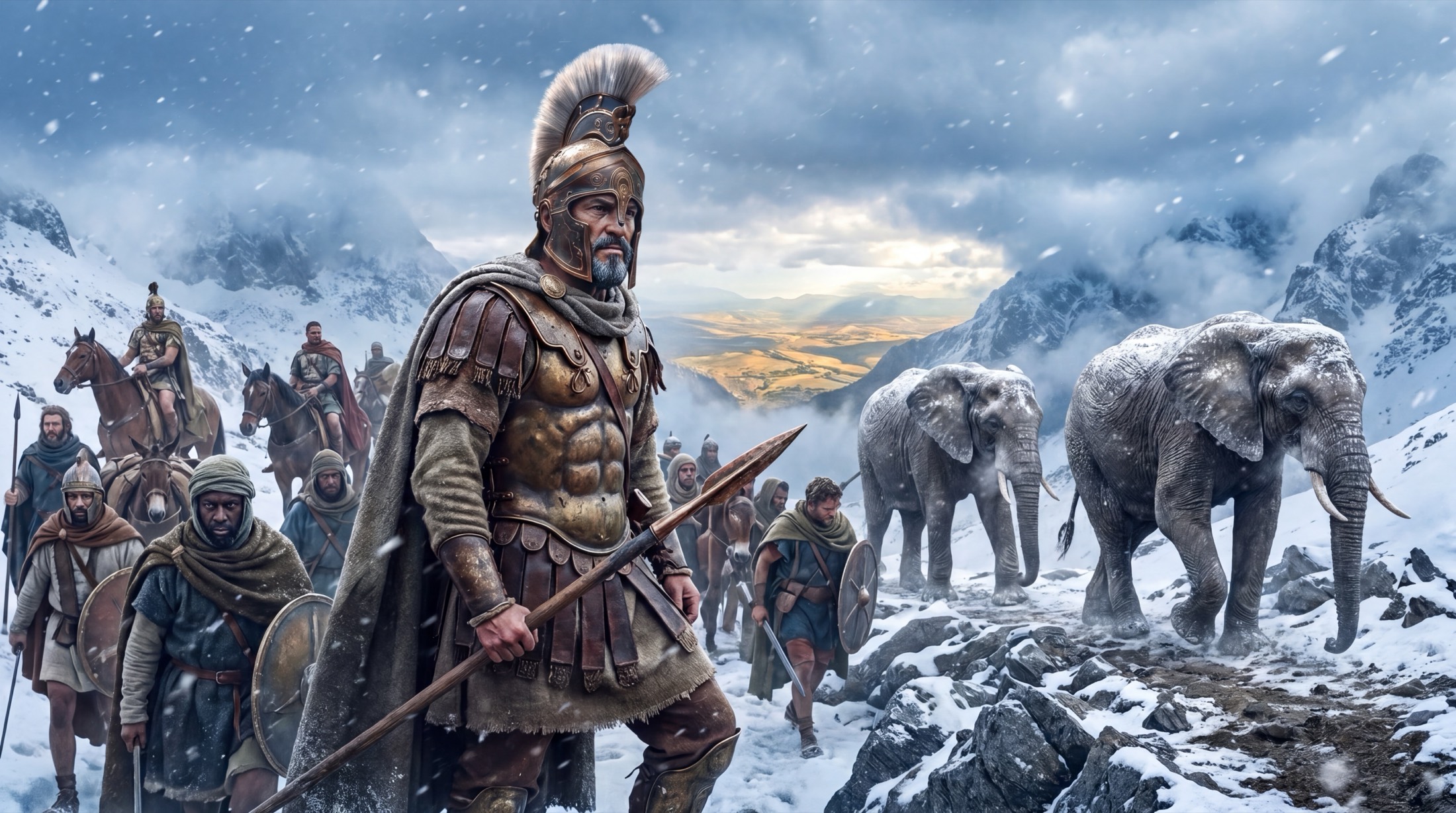
He left Iberia with an army drawn from many peoples and marched north.
Across rivers.
Across hostile lands.
Across the mountains.
Then came the Alps.
Soldiers, horses, and war elephants moved through snow and stone along one of the most dangerous military routes imaginable.
Men fell. Animals vanished into the passes. Cold and hunger followed every step.
This is not legend: Polybius later walked the passes himself and questioned men who had made the crossing.
ANCIENT ACCOUNT · POLYBIUS
Yet Hannibal emerged on the other side.
He had accomplished what Rome believed almost impossible.
He was in Italy.
And he had come not to defend Carthage —
but to bring the war to Rome itself.
Hannibal’s Hour
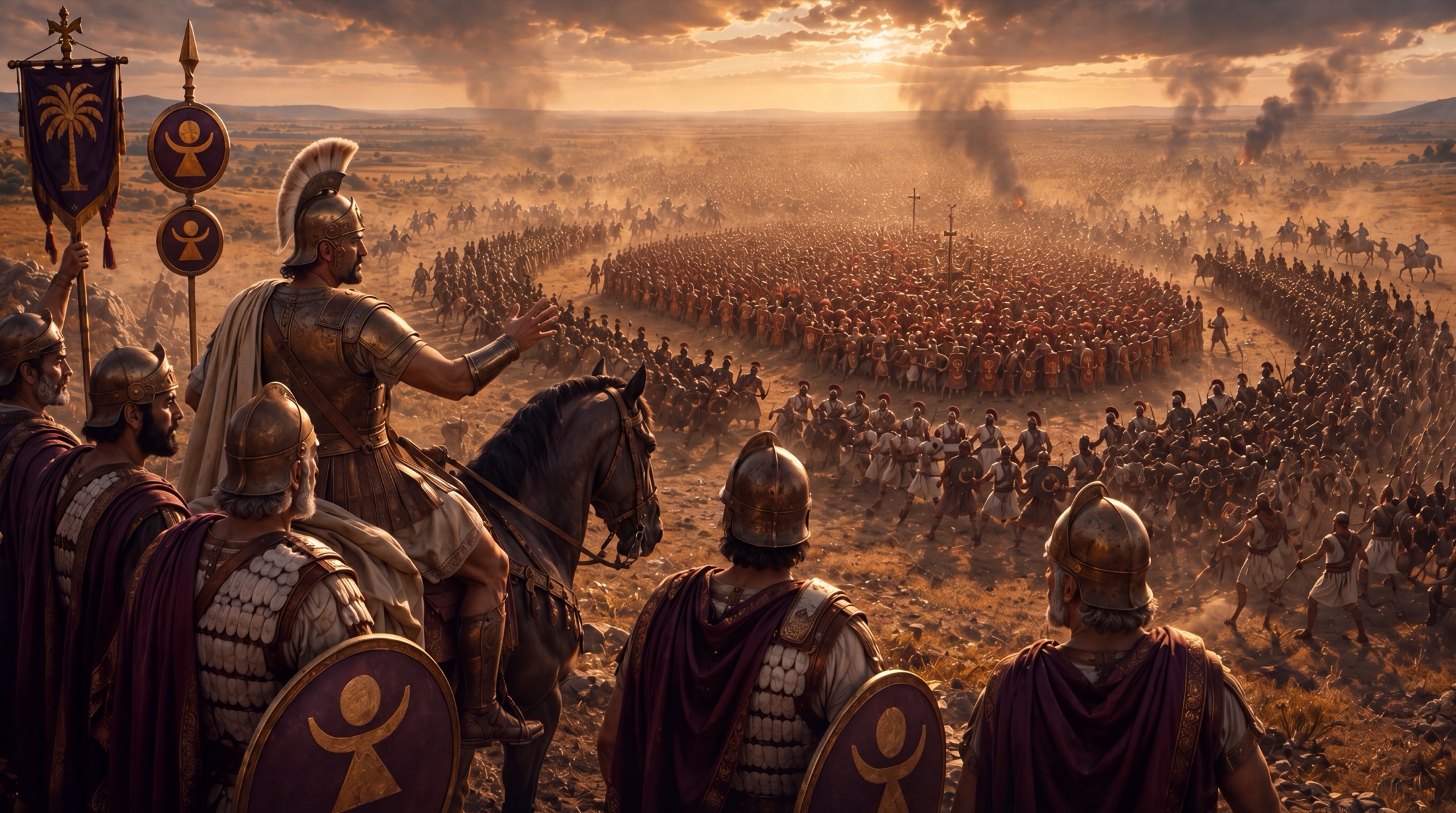
At Cannae, beneath the summer heat of southern Italy, Rome gathered an enormous army to crush Hannibal once and for all.
Hannibal allowed the Roman center to advance.
Slowly, his line bent inward.
Rome pressed deeper.
Then the trap closed.
Carthaginian forces swept around both sides of the Roman army until the legions found themselves surrounded.
What followed became one of antiquity’s most famous military victories.
Rome suffered a catastrophe almost beyond imagination.
Ancient writers counted the dead in tens of thousands in a single afternoon. Their numbers disagree — and modern estimates vary.
ANCIENT ACCOUNT
For a moment, Hannibal seemed unstoppable.
Cities reconsidered their loyalties.
Allies abandoned Rome.
Fear spread through Italy.
Yet Rome did something Hannibal could not force it to stop doing.
It survived.
The Turning Tide
For years, Hannibal had fought on Roman soil.
Now Rome carried the war across the Mediterranean.
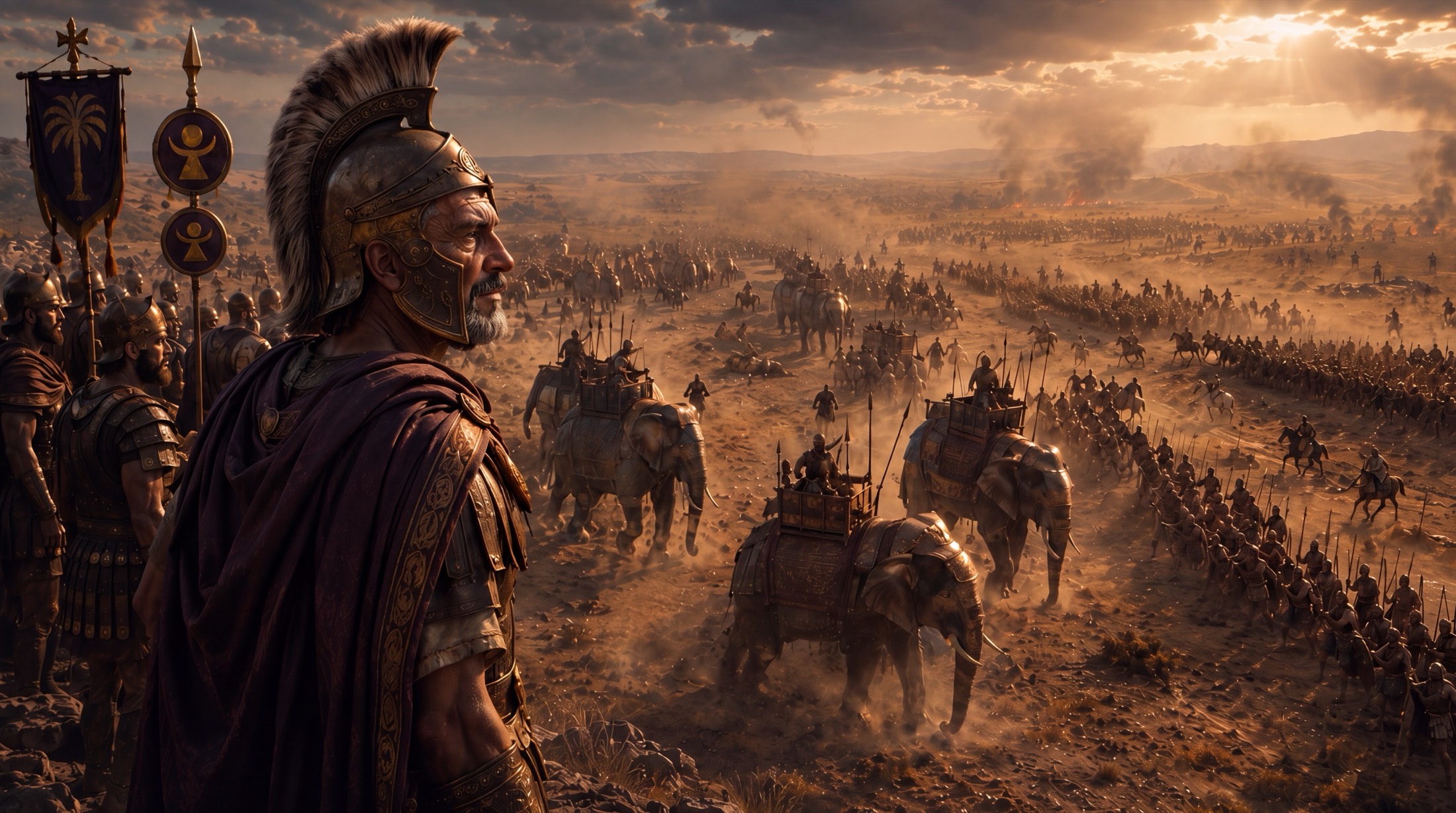
Near Zama, on the plains of North Africa, Hannibal faced the Roman commander Scipio.
The battle brought two extraordinary military careers together.
Carthage’s war elephants charged.
Roman lines opened.
Cavalry swept across the battlefield.
And by the end of the day, Hannibal’s army had been defeated.
The Second Punic War was over.
Carthage survived, but the world around it had changed.
Its empire was gone. Its military freedom was restricted. Its former territories were lost.
ANCIENT ACCOUNT · POLYBIUS
Rome had become the dominant power of the western Mediterranean.
The city that once ruled the sea now lived beneath the shadow of its greatest rival.
The Last Siege
More than fifty years passed after Hannibal’s defeat.
Carthage recovered economically. Its markets lived again. Its fields produced wealth. Its harbor still faced the sea.
But Rome had not forgotten.
In 149 BCE, Roman armies arrived in North Africa.
The Third Punic War had begun.
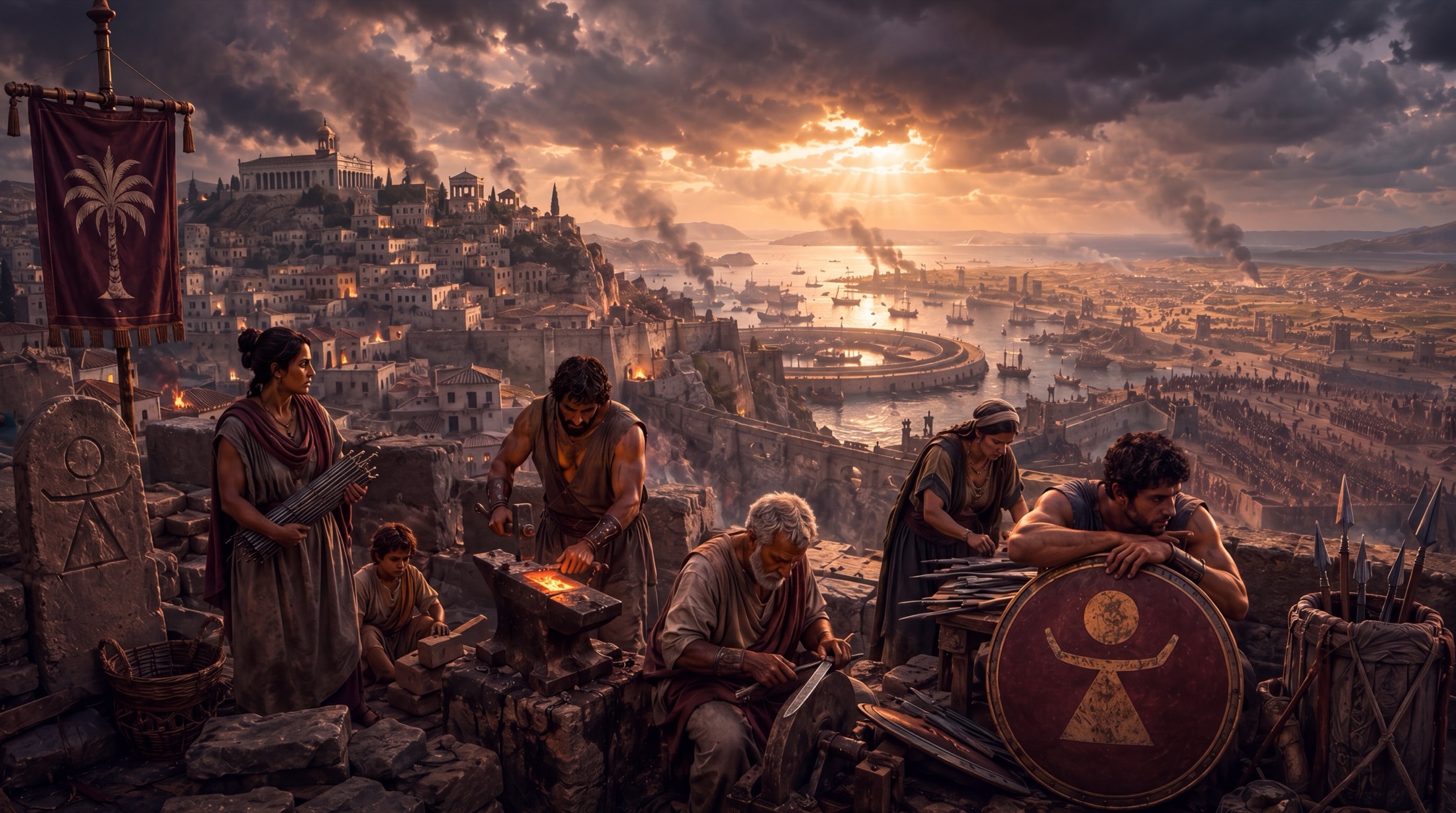
Carthage was surrounded.
For nearly three years, its people resisted.
Homes became workshops. Metal was gathered for weapons. Women cut their hair to be twisted into cords for the war engines.
ANCIENT ACCOUNT · APPIAN
The city that had once commanded armies across the Mediterranean was now fighting simply to remain alive.
In 146 BCE, Roman forces finally broke through.
Street by street, Carthage fell.
The fires were not quenched for seventeen days.
ANCIENT ACCOUNT · FLORUS
Then, silence.
In the morning light, the Roman commander watched the city burn to its end. Scipio spoke of the fall of great nations — and feared, aloud, that Rome's own day would come.
ANCIENT ACCOUNT · POLYBIUS
The ancient Punic city was destroyed. Its empire was gone.
The Echoes
After nearly seven centuries, the independent story of Punic Carthage came to an end.
But Carthage itself did not vanish.
Centuries of Punic language, religion, craftsmanship, agriculture, navigation, architecture, and cultural exchange had already left their mark across North Africa and the Mediterranean.
Rome would later build a magnificent new city upon the same ground.
Temples would rise again. Streets would fill with people. Ships would return to the harbors.
Civilizations would continue to layer themselves over the ruins.
Yet beneath them all remained the memory of the city that had once challenged Rome for mastery of the Mediterranean.
It is often said that Rome sowed the ruins with salt, so that nothing would ever grow again. No ancient source records it — the story is a modern myth, centuries younger than the ruins.
LATER MYTH
But stone remembers.
A city born, according to legend, from the courage of an exiled queen.
A city made wealthy by the sea.
A city carried into history by one of antiquity’s greatest generals.
And a city whose name survived its destruction.
Carthage fell in 146 BCE.
Its echoes never did.

 Chapter 01
The Origins
Founded by a fugitive queen.
 Chapter 02
The Awakening
A city turns toward the sea.
 Chapter 03
The Lady of Carthage
The sign that survived the city.
 Chapter 04
Two Rising Powers
Before they were enemies.
 Chapter 05
The First Warning
The sea does not belong to one power.
 Chapter 06
The Collision
When Rome reached for the sea.
 Chapter 07
The First Fall
Carthage loses the sea.
 Chapter 08
The Impossible March
Hannibal comes for Rome.
 Chapter 09
Hannibal’s Hour
The day Rome nearly broke.
 Chapter 10
The Turning Tide
Rome comes to Africa.
 Chapter 11
The Last Siege
A city refuses to disappear.